About me
A few years ago I got very good at appearing functional while running on empty
I knew the productivity frameworks. I’d read the books. I understood, intellectually, what I was supposed to do. And on the days when my brain was willing, it worked fine. But there were a lot of days when my brain wasn’t willing, when the simplest task felt unreachable, when motivation didn’t show up no matter how much I needed it to, and almost nothing I read acknowledged that those days existed, let alone offered anything useful for them.
So I started exploring it myself.
What I’m actually doing here
I’m not a doctor or a clinician, and I won’t pretend to be. What I do is read deeply into the research, the clinical models of burnout, the physiology of a stressed nervous system, what the evidence on perimenopause and hormone therapy actually says, and turn it into something you can use without needing a medical degree to decode it first. Where the science is still contested, I say so. Where it points somewhere useful, I show you where.
That honesty matters most in the health books. When I write about burnout recovery or perimenopause, I’m giving you information and the language to advocate for yourself, not personal medical advice. The aim is to walk you into a doctor’s appointment better informed and harder to dismiss, not to replace the appointment.
Here’s what matters: I’m learning and applying these ideas to my own life at the same time I’m sharing them with you. My books and blog aren’t prescriptions from someone who’s “solved” these problems. They’re frameworks I’m actively testing, thinking through, and seeing what actually works when motivation is low and the day feels long.
I use AI as a research and drafting tool, to help me organize what I’m learning and pressure-test it. The direction, the judgment, and the responsibility for what these books say are mine.
My work is for people who are trying. Who want to do good work and live well and aren’t looking for someone to tell them to try harder. Who need something that meets them where they actually are—and who appreciate honesty over perfection.
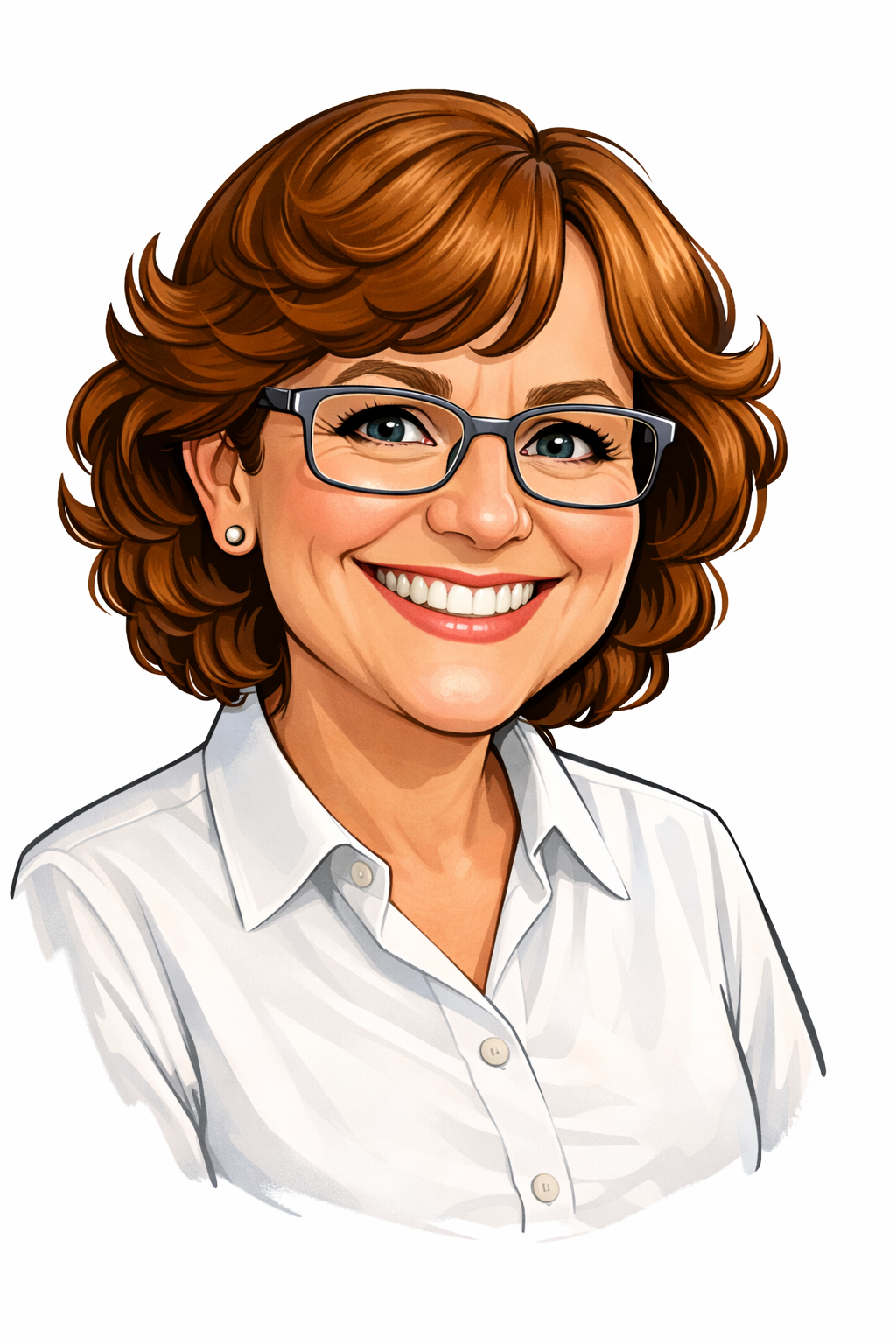
Why I Use a Caricature Instead of a Personal Photo
You’ll notice I use a caricature rather than a personal photo. That choice is intentional.
My professional role requires a degree of privacy, and I want to keep a clear boundary between my day-to-day work and the ideas I share. The caricature allows me to do that while still showing up as a real person.
Everything I write comes from genuine experience and careful thought — the illustration just protects the part of my life that needs to stay separate.