

Books
My Books
Featured book
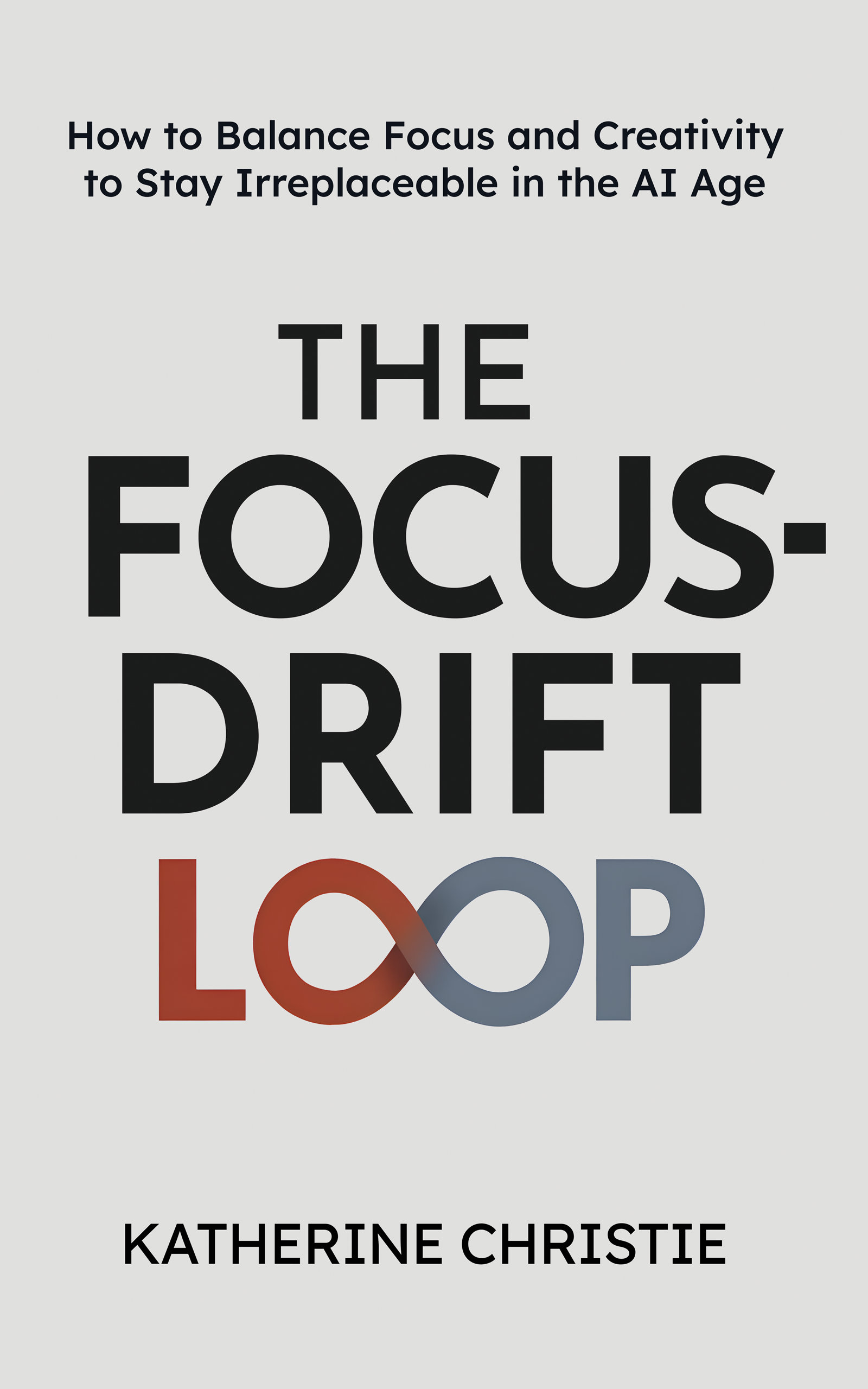
The Focus-Drift Loop
Most of us have been taught that a wandering mind is a wasted one.
We’ve built our working lives around the idea that sustained, unbroken focus is the goal — that the ability to concentrate relentlessly is what separates high performers from everyone else. And so we schedule our days in tight blocks, eliminate every distraction we can find, and feel quietly guilty every time our mind drifts somewhere we didn’t tell it to go.
What if that guilt has been costing you more than the daydreaming ever did?
The Focus-Drift Loop is about how the brain actually works — not how we wish it worked, or how productivity culture insists it should. It’s about the neuroscience of mental wandering: why your best thinking often happens away from your desk, why the shower insight is real and not a fluke, and why the relentless push for more focus may be working against the very outcomes you’re trying to achieve.
This isn’t a book about doing more. It’s about understanding the natural rhythm your brain was already trying to follow — and learning to work with it instead of against it.
For anyone who has ever felt behind, distracted, or somehow insufficient despite genuinely trying: the problem may not be your focus. It may be that no one told you the drift was doing something important.
Featured book
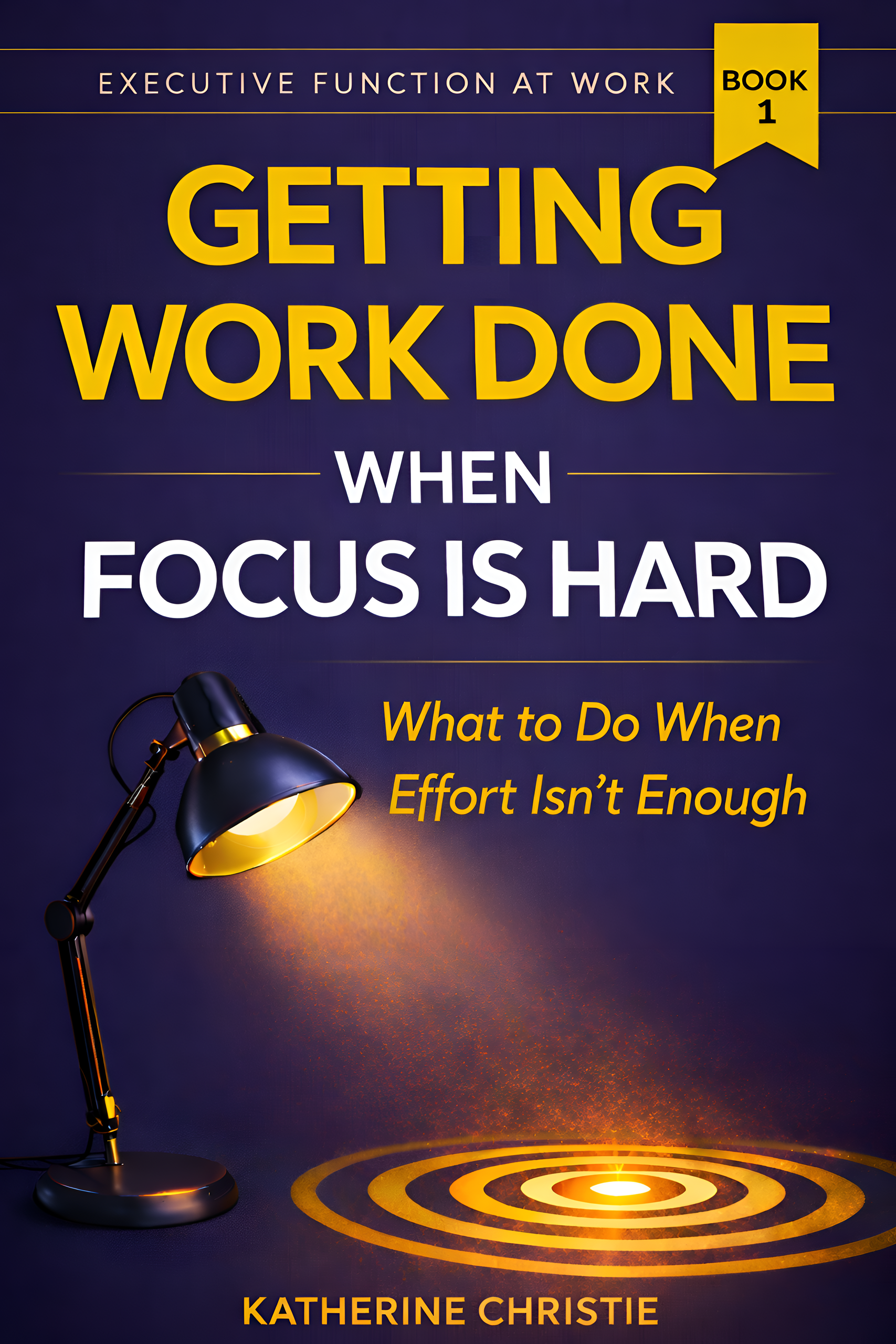
Getting Work Done When Focus Is Hard
You know what needs to be done. You care about doing it. And still, something stops you.
This book is for the days when your brain won’t cooperate — when the simplest task feels impossibly heavy, when you’ve reread the same email four times and still can’t process it, when you’re watching yourself be stuck and can’t figure out how to move.
It’s not a productivity system. It’s not written by someone who has it all figured out. It’s a practical, compassionate guide for anyone who has ever sat at their desk feeling completely frozen, and needed strategies that actually account for that — rather than assuming you just need a better to-do list.
What you’ll find here are small, realistic approaches to starting, working, and ending the day without shame. Things that work with your brain on the hard days, not just the easy ones.
Book 1 in the Executive Function at Work series.
Featured book
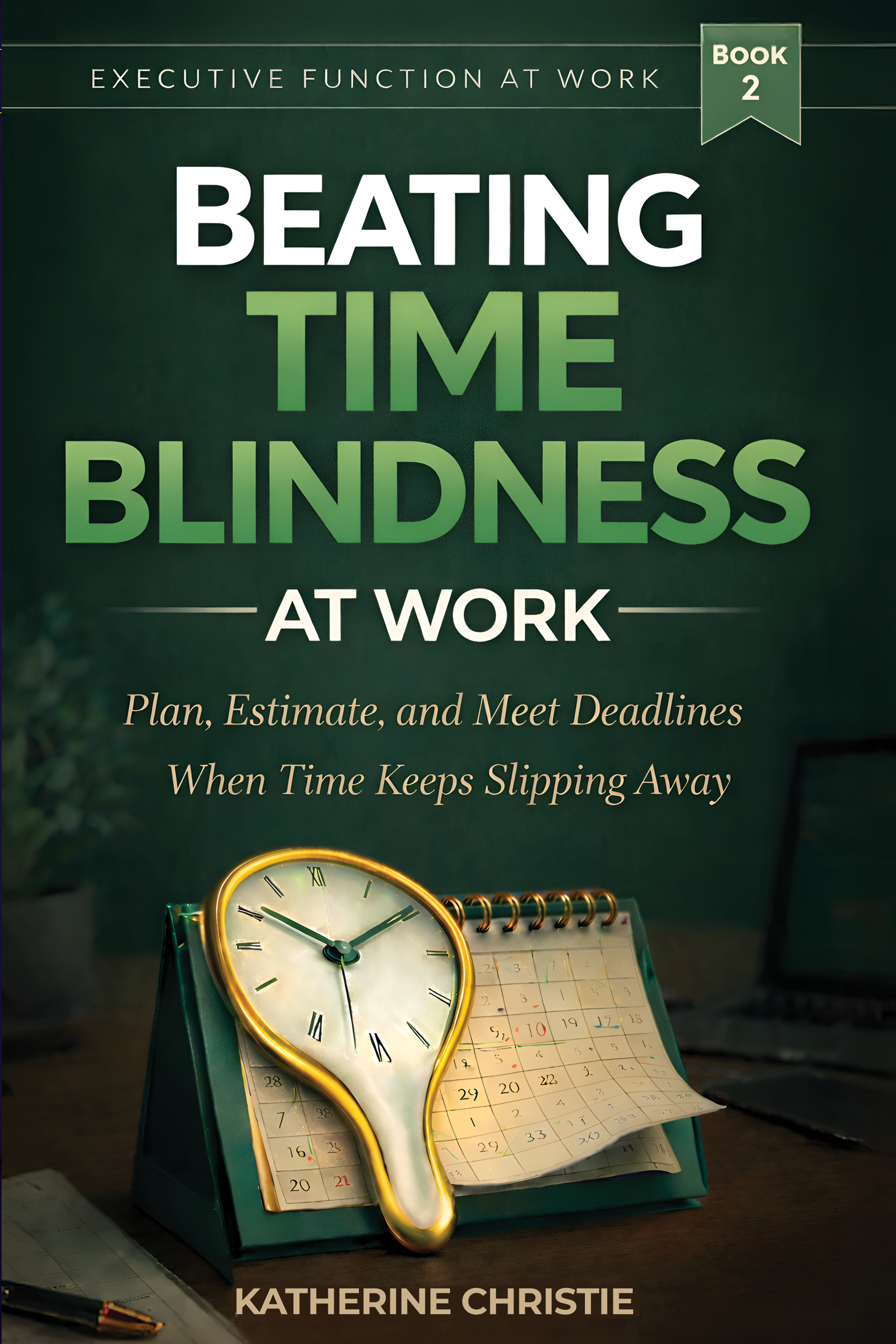
Beating Time Blindness at Work
You had a plan for today. You know you did.
You knew what needed to get done. You had enough time. And somehow, somewhere between morning and late afternoon, the hours did something you didn’t expect — and the day ended looking nothing like what you intended.
This isn’t about being disorganised. It isn’t about not caring, or failing to plan, or needing a better system. It’s about something more fundamental: the way your brain perceives time isn’t always giving you accurate information. And when that internal signal is unreliable, no amount of effort or intention will reliably get you where you’re trying to go.
This book is about that. About why time feels slippery even when you’re paying attention to it, why your estimates are almost always too optimistic, and why the tools everyone recommends keep failing you in the same ways. It’s also about what actually helps — not stricter schedules or more detailed planning, but practical approaches that account for how time perception really works, and how to build a working life around that honestly.
If you’ve spent years convinced that your relationship with time says something unflattering about who you are, this book asks you to consider that it says something far more ordinary: that you’ve been working without the right tools.
Featured book
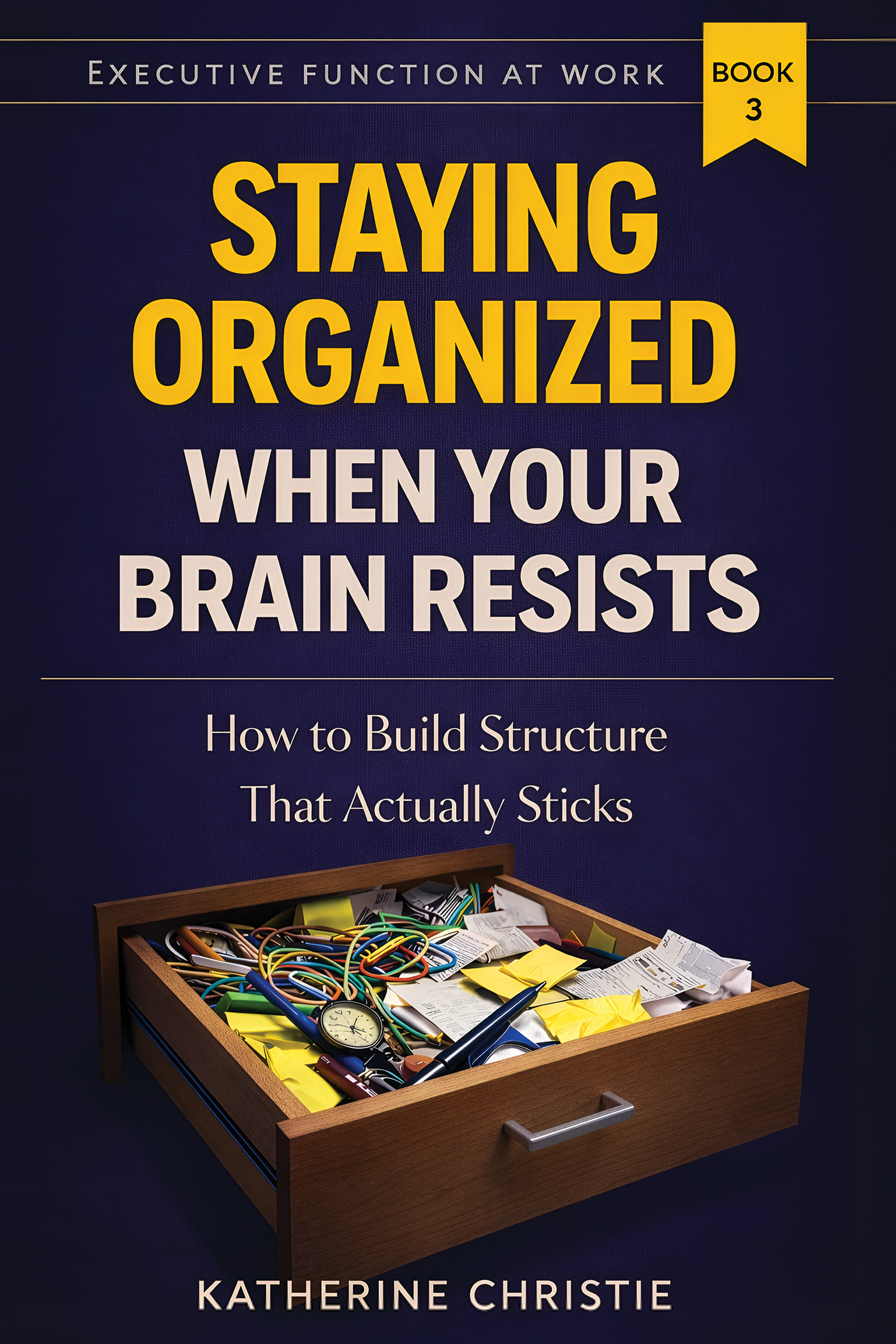
Staying Organized When Your Brain Resists
You’ve done this before. You found the app, set up the lists, built the system. For a while, it worked. Then a difficult week hit, you fell behind, and the backlog sat there collecting guilt until it was easier to abandon the whole thing than face it.
So you started over. New tool, new method, same outcome. And somewhere along the way, you started to believe the problem was you.
It isn’t.
Most organizational systems are designed for someone who is rested, focused, and operating at full capacity every day. When that version of you doesn’t show up, the system breaks. When the system breaks, the blame lands on you. And when the blame lands enough times, you stop trusting yourself with systems at all.
This book starts from a different place. The problem isn’t your discipline or your follow-through. The problem is that most systems are too fragile. They demand too much daily maintenance, too many small decisions, and too much catching up after any disruption. They are built for ideal conditions, and ideal conditions rarely show up.
The systems here are designed for your actual week, not the best version of it. They have minimum versions for low-capacity days. They have re-entry points for when you’ve been away entirely. They don’t require consistency in the rigid sense, and they don’t collapse the moment you stop paying attention to them.
If you’ve spent years cycling between building systems and abandoning them, convinced that organization is something other people can do and you simply can’t, this book offers a different explanation: you weren’t failing the system. The system was failing you.
Read my books before they're published.
Join an exclusive group of readers who receive advance copies of my new books in exchange for an honest review at launch.
Thank you!
You have successfully joined our ARC subscriber list.